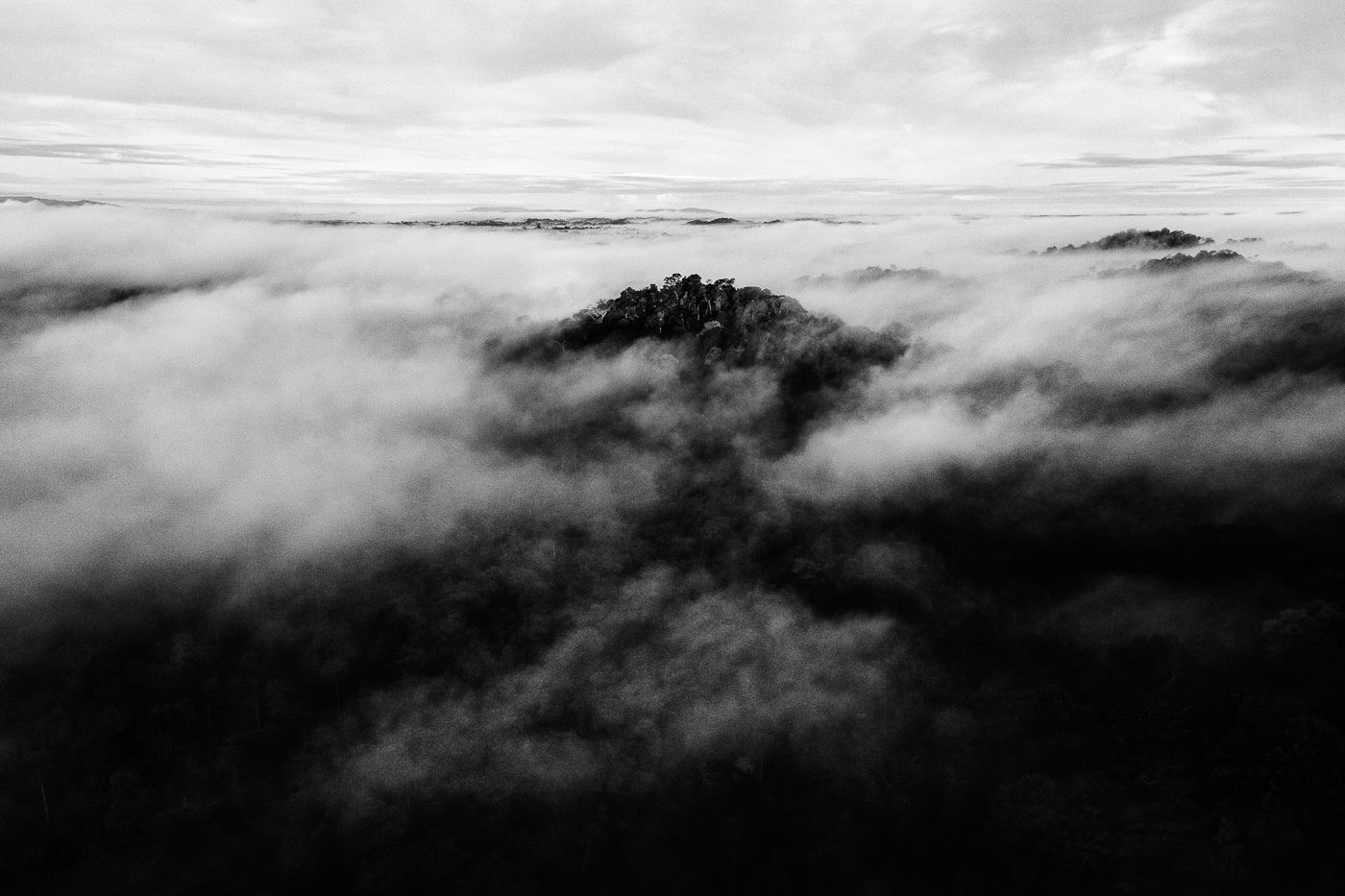
Maroni
Chapter II — Where the Border Runs: Tales from the River Sides
"Gold is a dream you chase to reach another dream."
Along the banks of the Maroni, in French Guiana, that dream moves from camp to camp. It promises a roof, a debt wiped clean, a business of one's own, a child in school, a fresh start. To make it real, you have to dig, divert, cut, amalgamate. Turn the forest into a worksite, the earth into a scar.
Gold is almost nothing, and yet it concentrates everything. Its rarity manufactures its value, its shine keeps the myth alive. Reserve, ornament, guarantee. It reassures those who hold it, fascinates those who hunt it, legitimizes the havoc it causes. Its weight is imaginary first. Its effects are concrete.
Deep in the forest, far from cities and institutions, a society reassembles itself. Hidden camps, clandestine roads, improvised services, bars and shops among the trees. Capital flows under plastic tarps, by generator light. Invest, extract, turn a profit. But also live: share meals, gamble, love, dream of somewhere else. A hard life of fatigue and fever, boredom and adrenaline, where adventure runs alongside precarity.
Illegal and mobile, this economy moves at the edge of the law. Armed forces hunt it down, destroy the installations, seize the equipment. The camps move on, rebuild farther out, sometimes in the same place. The chase is part of the cycle.
Even in the heart of the Amazon, the model does not disappear. It condenses. A capitalist economy in its raw state, reproduced in the shade of the canopy.
But the forest here is no backdrop. It is nurturing ground, a space of subsistence, a territory of transmission. For the Wayana Amerindian communities it is a sacred place, crossed by stories, knowledge and invisible bonds. The river is no mere geographic border: it structures movement, exchange, ties. When its waters turn murky, it is not only an ecosystem that falters. It is a world.
In French Guiana, the price we put on gold takes material form: gaping craters, waters thick with sediment and mercury. The disaster is ecological and sanitary. The poison seeps into the food chain, passes through bodies, settles into the long term. Clandestine gold mining is one visible cause, major but not alone. The forest is being transformed in the continuity of a history made of arrivals, extractions and departures: people come, exploit, leave, trailing marks more lasting than promises. Value is decided elsewhere and leaves its imprint here.
In this chapter of Where the Border Runs: Tales from the River Sides, gold mining exposes the gap between projected wealth and the land that bears it. The Maroni links distant economies to an inhabited forest, threaded with lives and memories.
Gold circulates. Dreams move on. The forest still carries the weight of a single fleck.