Le Poulpe au regard de soi(e)
Antefuturism

Le Poulpe au regard de soi(e)

Antefuturist cycle · 2023 – 2026

Reader, would to heaven that you could bear the icy glare of these images, begotten by a beast with neither heart nor breath. Whoever is about to cross this threshold should know this: the ground ahead is mined. The visions that rise here were born in the mute shadow of processors, shaped by insatiable algorithms.

They advance in tight ranks, a swarm of ghost fireflies. Their glare seduces. Their song is silent. But they carry neither the bite of the real nor the burn of life. They imitate beauty without having known the struggle that brings it forth.

The new Creator has neither gaze nor memory. It absorbs, computes, spits back out. From a fragment of text it begets countless images, all different, all alike. Icons without venom, visions without wound.

So they must be torn from that cold proliferation. Brought back toward matter, weight, error. Given over to light, to salt, to paper, so that something may still resist.

For without resistance there is no image. Only apparitions.

Begun in the early days of consumer generative artificial intelligence, Le Poulpe au regard de soi(e) questions the place of the creative gesture before the machine-made image. The work unfolds in six cantos, each exploring photographic techniques and material transformations drawn from fragments of the Comte de Lautréamont's Chants de Maldoror. The generated images become the negatives of cyanotypes, a process whose invention coincides with the birth of Isidore Ducasse, before being put through various treatments that reinforce their material uniqueness.
In this series
I.Chant I2023
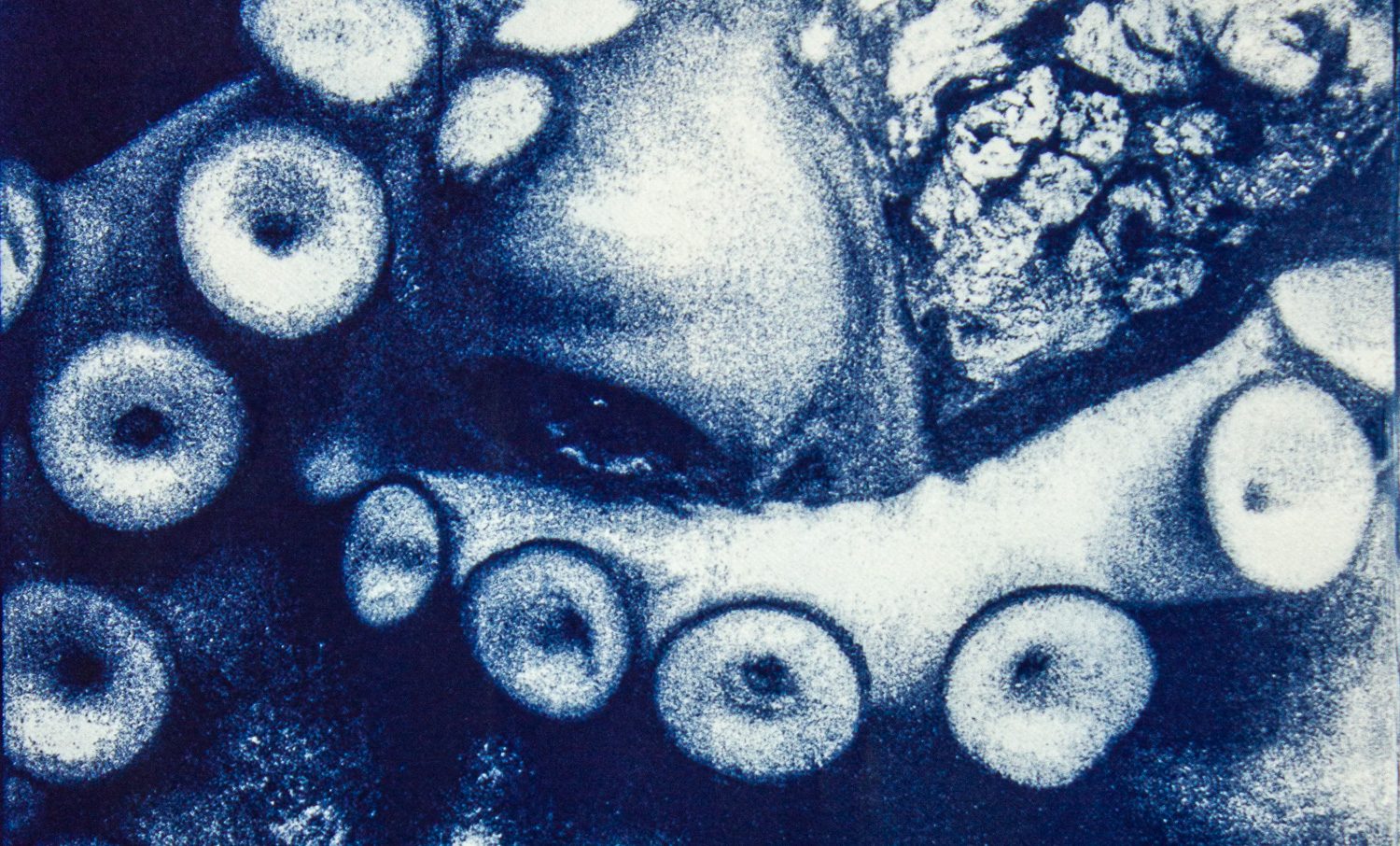
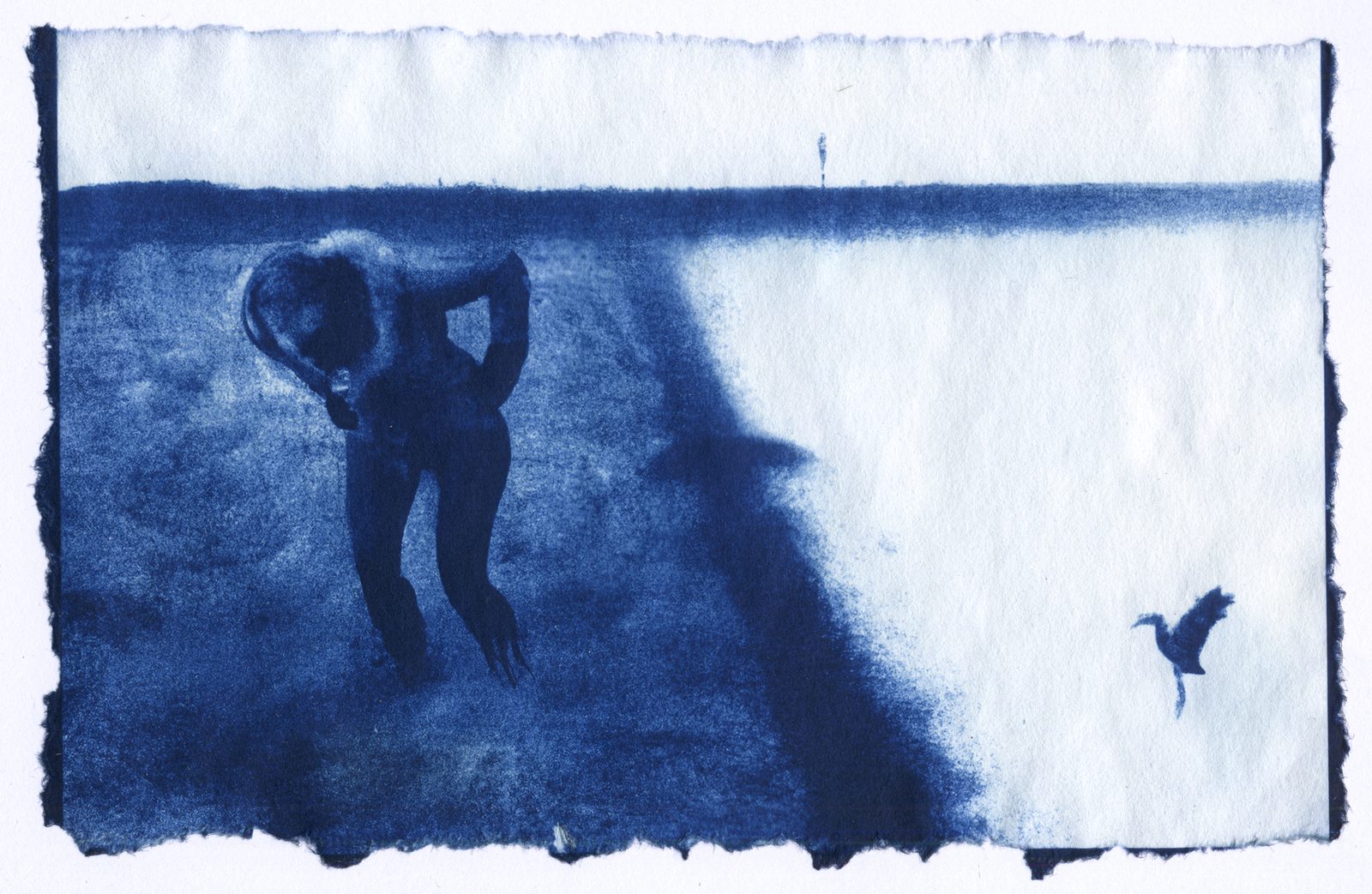
Chant I brings together thirty cyanotypes drawn from fragments of the Chants de Maldoror. These images never passed through the world. No instant saw them come into being. They carry no trace, no memory, no gaze. Visions without origin, reflections without source. And yet here they are, fixed on paper, literally painted with sunlight. Photography keeps the signs. But the origin is gone. Perhaps these are not photographs. Only apparitions. Images painted with a dead light. Cyanotypes on Sumi-E paper, variable dimensions.
Open →
II.Chant II2024
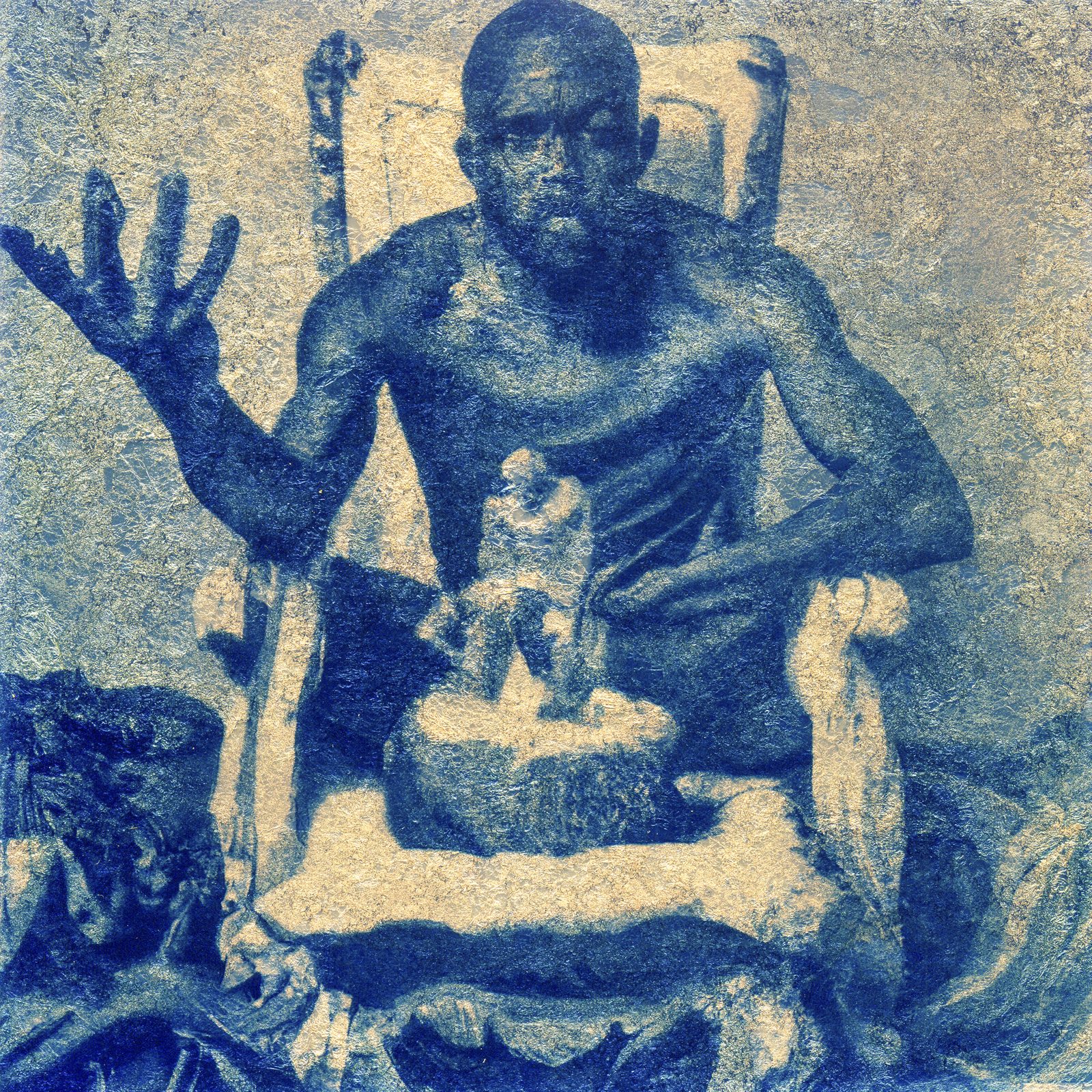
Chant II brings together sixty-four cyanotypes mounted onto gold leaf. Drawn from a single passage of the Chants de Maldoror, the images are born of a mechanical proliferation. One source, multiplied until it loses its venom. Torn from that digital mud, they are brought back toward matter. The cyanotype burns them into blue. The gold leaf covers them with an ambiguous shine, between icon and relic. Each image tries to become singular again. As if gold could redeem what has been multiplied. Cyanotypes on gold leaf, 20 × 20 cm.
Open →
III.Chant III2024
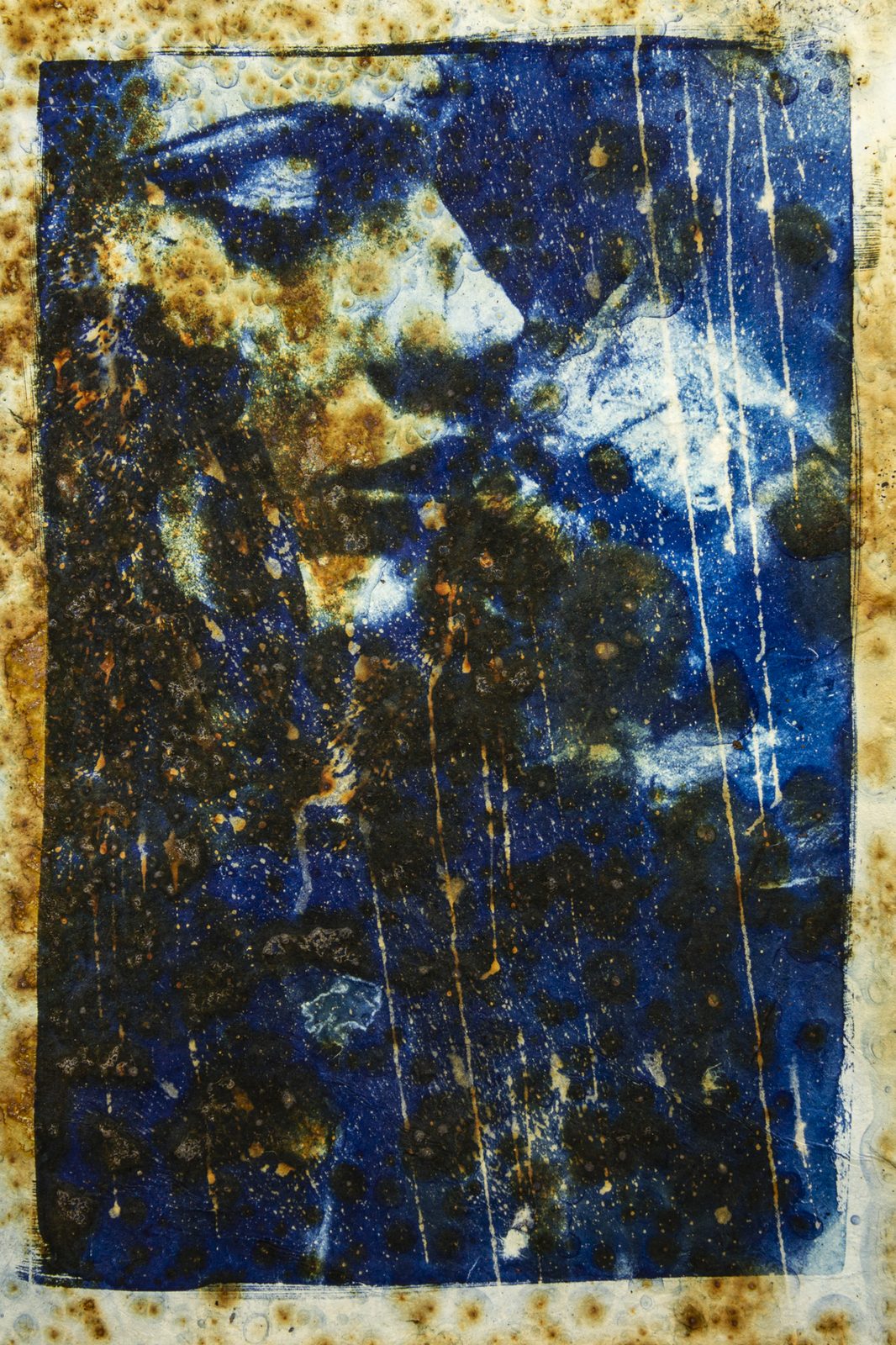
The perfect image is an insult. Smooth surface, mathematical silence, no flaw. Born in the sterile cage of an algorithm, it knows nothing of doubt, of dust, of time. It believes itself whole. It believes itself finished. But the world rusts. So we opened the valves. Air, water, metal. Corrosion settled over the blues of the cyanotype like a slow leprosy. Chemicals burned the too-obedient surface. Contours gave way. The image began to suffocate. This is not an accident. It is a necessity. Entropy becomes a form of writing. An organic answer to the fixity of code. Where the machine generates without end, matter recalls that all things decay. Rust does what the algorithm cannot. It destroys. It transforms. It lets the image die so that it may become real again. Chant III subjects the cyanotypes to corrosion and chemical alteration. The generated image is deliberately destabilized by matter, entropy and oxidation acting as forces of transformation. Three images, each printed seven times, exposed to the process in varying degrees. Cyanotypes on Mitsumata paper, rust, caustic soda, 36 × 52 cm.
Open →